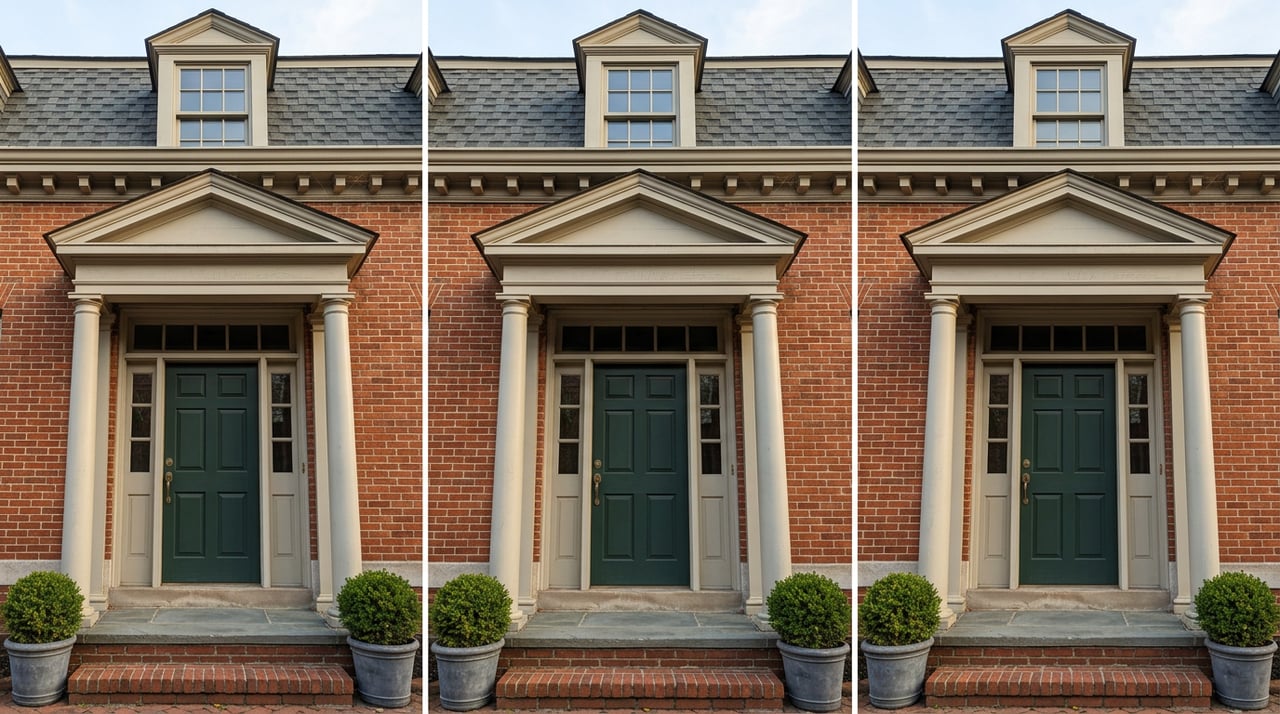
In Fredericksburg's Historic District, Permission Is Cheap. Forgiveness Isn't.
September 3, 2026
September 3, 2026
Blake and Aby Bethem had already opened the doors on Vivify Burger & Lounge at 314 William Street when they ran into a problem. Somewhere in the buildout, stucco went onto the building's facade before anyone asked the city's Architectural Review Board whether that was allowed. The Bethems applied for a Certificate of Appropriateness after the work was done, hoping for a rubber stamp. The board denied it at its May 13 meeting. Their next stop was Fredericksburg City Council, where the appeal was scheduled to be heard June 11, in an open session, decided by elected officials rather than city planning staff.
Compare that with what happened at 209 Prince Edward Street this spring. A property owner there wanted a six-foot wood privacy fence along the rear yard. The application went through the city's administrative review track, the kind of routine request that doesn't require a public hearing, just a staff recommendation that the board consents to. It was approved, with a friendly suggestion to let the wood weather before staining it.
Same district. Same board. Same underlying ordinance. Wildly different experiences. The difference wasn't the project. A fence and a facade finish are both exterior changes that require a Certificate of Appropriateness in the Old and Historic Fredericksburg District, the zoning overlay that covers hundreds of buildings across the city's historic downtown core. The difference was sequence. One owner asked first. One owner didn't. That single variable is the thing every buyer eyeing a home inside this district needs to understand before writing an offer, because it determines whether historic ownership here is a minor scheduling detail or a genuine liability.
The rule sounds absolute until you look at what's actually exempt. Routine maintenance and repair typically don't require review at all. Replacing deteriorated material with something identical doesn't either. Repainting a surface that's already painted is fine without a hearing. Interior work that doesn't touch anything visible from the street or from city property is outside the board's jurisdiction entirely.
What does trigger review is anything that changes the exterior character visible from a public right of way: new construction, additions, demolition, fences, accessory structures, signs, and alterations to existing buildings. There's one detail that trips people up specifically: the board does not review paint colors on surfaces that are already painted, but applying paint or any coating to previously unpainted masonry, stucco, or metal does require a Certificate of Appropriateness. That's precisely the category the Bethems' stucco fell into.
Here's the mechanism that makes timing so consequential. Applications for a Certificate of Appropriateness are due the third week of each month to be heard at the board's regular public hearing, which happens on the second Monday of the following month. Miss that window by a few days and you're not looking at a short delay. You're looking at waiting for the next full cycle.
The board is required by ordinance to act within 90 days of an official submission, but in practice the district's own guidance says the process routinely takes about a month, with most decisions landing in the four to six week range. That's a real, workable timeline for anyone planning ahead. It's also exactly why acting first and asking forgiveness later backfires so badly. Once a project moves from routine board business into a denial and an appeal, it leaves the fast administrative lane and enters the City Council's calendar, which runs on a completely different clock and a completely different audience.
The fee structure scales with what you're proposing, and it's modest by any renovation budget:
| Project type | Fee |
|---|---|
| Signs, fences, accessory structures | $75 |
| Alterations or partial demolition | $150 |
| New construction, additions, or complete demolition | $250 |
A Certificate of Appropriateness, once granted, stays valid for two years, with the option to request up to two one-year extensions if a building permit is already in hand. For a buyer thinking about a porch rebuild or a fence next spring, that window is generous enough to plan around, so long as the application goes in before the contractor shows up.
There's a second layer of confusion that catches buyers even when they've done their homework: Fredericksburg has both a local Historic District zoning overlay, which is what actually triggers Architectural Review Board jurisdiction, and a National Register Historic District designation, which is a separate federal and state recognition. These two largely overlap geographically, but they are not the same thing, and a listing sheet or title report that mentions "historic district" doesn't tell you which one it means.
This matters for two very different reasons. If your parcel sits inside the local overlay, you need a Certificate of Appropriateness before touching the exterior, full stop, regardless of whether the house is individually significant. If your parcel is on the National Register instead, or determined eligible for it, that's the designation that opens the door to historic rehabilitation tax credits, and it doesn't by itself require ARB sign off. The city's own guidance points buyers to check both layers on FredGIS separately, and specifically flags the local overlay layer as the one that governs day to day matters like permits. Before you write an offer on a home anywhere near downtown, that's a five minute check worth doing, not an assumption worth making.
Historic tax credit programs get advertised in the aggregate, sometimes as a combined 45 percent of eligible rehabilitation costs when federal and state credits stack. That number is accurate for income producing property, but it's misleading for the buyer planning to live in the house. The federal 20 percent credit generally requires the building to be used for rental, commercial, or other income producing purposes, not as an owner's private residence. The Virginia state credit is more accommodating: an owner-occupied residential building can qualify for the state credit as long as eligible rehabilitation expenses reach at least 25 percent of the home's assessed value.
In practical terms, that means most buyers restoring a house they intend to live in should plan around the state credit and the city's own incentive, not the full federal and state combination. Fredericksburg's local program offers a partial exemption from the real estate tax increase that results from a qualifying rehabilitation: the first two years of added assessment are excused entirely, then the exemption declines on a sliding scale over five more years, for a full seven year runway. To qualify, the project needs to increase the property's base value by at least 30 percent, and the addition can't grow the structure's total square footage by more than 15 percent, though finishing an existing basement or attic doesn't count against that cap. The application and a city inspection have to happen before any work or interior demolition begins, which is the same lesson as the ARB process: the incentive rewards owners who ask first.
If a house you're considering sits in or near downtown Fredericksburg, a few steps before closing save real time and money later:
Does every exterior change in the historic district need approval? No. Routine maintenance, repairs using identical materials, repainting already painted surfaces, and interior changes that aren't visible from a public street typically don't require a Certificate of Appropriateness.
What happens if work is done without approval first? The board can still review it after the fact, but a denial sends the matter to Fredericksburg City Council on appeal, a slower and more public process than the standard administrative or board review track.
Is my house automatically in the local historic district if it's on the National Register? Not necessarily. The two designations largely overlap but aren't identical, and only the local Historic District overlay triggers Architectural Review Board jurisdiction. Checking both layers on FredGIS before closing is the reliable way to know.
Can I get both the federal and state historic tax credit on a home I live in? Usually not the federal piece. That credit generally applies to income producing property. The Virginia state credit and the city's own tax exemption program are the two most realistic paths for an owner-occupied home.
Historic district homes in Fredericksburg carry real character and, for the right buyer, real financial upside once the rehabilitation math is understood correctly. The rules aren't the obstacle. Skipping the sequence is. If you're weighing a purchase inside the district and want to understand what a specific property would require before you write an offer, Cheantae Lewis can walk through the details with you and help you plan the timeline correctly from day one.
Stay up to date on the latest real estate trends.
Reach out to Cheantae Lewis for expert real estate services. Buy, sell, or rent properties with confidence. Contact her today!